
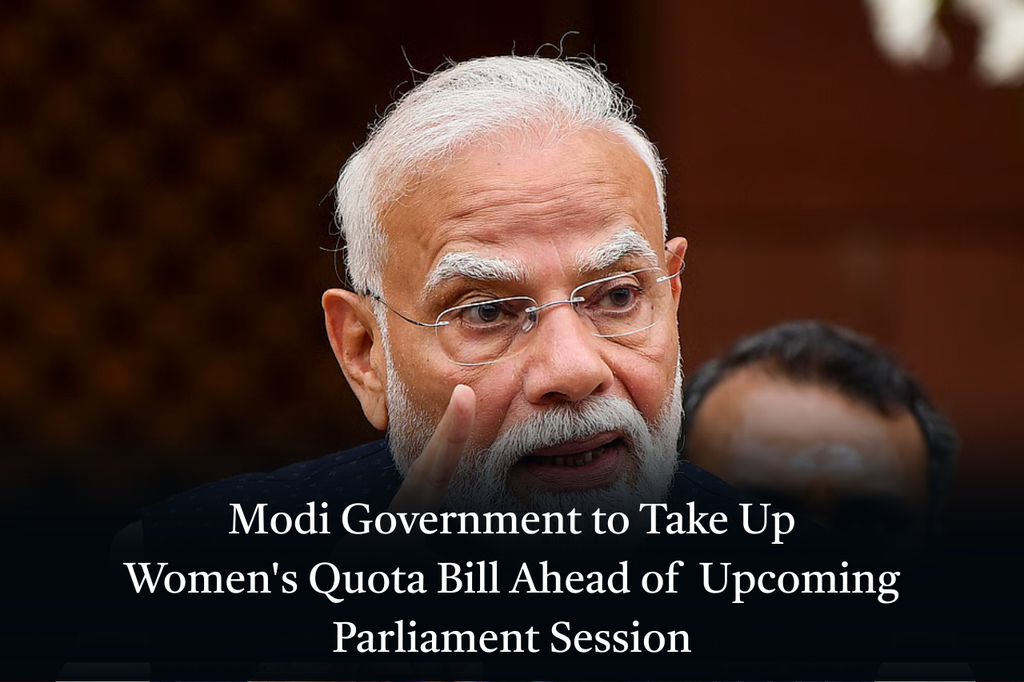
The Narendra Modi-led government is preparing to take another major step towards implementing 33% reservation for women in India’s Parliament and state legislative assemblies. The Union Cabinet is scheduled to discuss the women’s reservation bill on Friday, November 27, ahead of a special Parliament session beginning next week.
The proposed legislation aims to provide greater political representation to women by reserving one-third of seats in the Lok Sabha and state assemblies. The government is also considering changes to the earlier constitutional amendment proposal, which connects women’s reservation with delimitation and an increase in the number of parliamentary seats.
The development comes months after the government’s previous constitutional amendment bill failed to secure the required support in the Lok Sabha in April 2026.
Prime Minister Narendra Modi is expected to chair the Cabinet meeting, where ministers will discuss possible amendments to the proposed legislation.
With Parliament scheduled to reconvene from November 30 to December 3, the upcoming discussions could become an important moment for women’s political representation in India.
But what exactly is the women’s quota bill? Why is the government linking it with delimitation, and when could women benefit from the proposed reservation?
Let’s understand the major developments.
Union Cabinet to Discuss Women’s Reservation Bill on Friday
The Union Cabinet, chaired by Prime Minister Narendra Modi, is scheduled to meet at 1 PM on November 27 at Sewa Teerth in New Delhi.
According to government sources, the meeting will take up the delimitation-linked women’s reservation proposal.
The government may consider amendments to the earlier version of the bill, which aims to provide 33% reservation for women in the Lok Sabha and state legislative assemblies.
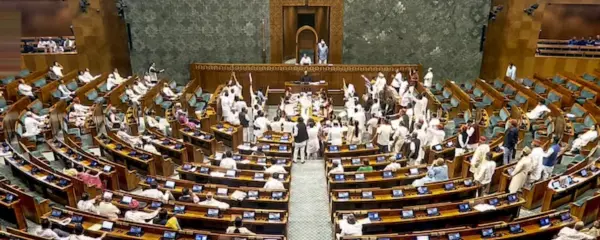
The Cabinet discussion is taking place ahead of the special sitting of Parliament scheduled for next week.
The government wants to move forward with the constitutional amendment and explore ways to secure sufficient parliamentary support for its passage.
However, the final details will depend on the decisions taken by the Cabinet and the legislation presented before Parliament.
Parliament Session Scheduled From November 30
The government has proposed reconvening Parliament for a special sitting from November 30 to December 3, 2026.
Lok Sabha proceedings are scheduled to resume on November 30, while the Rajya Sabha will reconvene on December 2.
Parliamentary Affairs Minister Kiren Rijiju announced that the government had requested the presiding officers of both Houses to reconvene Parliament to conduct essential government business.
The special sitting will be an extension of the Monsoon Session, which was adjourned on August 13.
Although the government has not officially disclosed the complete legislative agenda, the women’s reservation and delimitation proposals are expected to receive significant attention.
The upcoming session could determine whether the government can introduce a revised constitutional amendment and secure support from other political parties.
What Is the Women’s Reservation Bill?
The Women’s Reservation Bill, officially known as the Constitution (106th Amendment) Act, 2023, provides for reserving one-third of seats for women in the Lok Sabha, state legislative assemblies and the Delhi Legislative Assembly.
The law was passed by Parliament in September 2023 and received presidential assent later that month.
Its main objective is to improve women’s participation in India’s political system.
Under the proposed reservation framework:
- 33% of seats in the Lok Sabha will be reserved for women.
- One-third of seats in state legislative assemblies will be reserved for women.
- One-third of seats reserved for Scheduled Castes and Scheduled Tribes will also be reserved for women belonging to those categories.
- Reserved seats will be rotated after subsequent delimitation exercises.
The law represents an important step towards improving gender representation in Indian politics.
However, its implementation is linked to a future census and delimitation exercise under the existing constitutional framework.
This means that although the legislation has already been passed, the reservation has not yet become operational.
The government is now exploring ways to accelerate the implementation process.
Why Is the Modi Government Linking Women’s Quota With Delimitation?
Delimitation is the process of redrawing electoral constituency boundaries and determining the allocation of seats based on population-related considerations.
The government argues that increasing the number of parliamentary seats could create more opportunities to implement women’s reservation.
Under the earlier proposal, the government sought to increase the strength of the Lok Sabha from its existing 543 seats to a maximum of 850 through a delimitation exercise.
The proposal aimed to make 33% reservation possible while expanding parliamentary representation.
Recent reports indicate that the government may consider providing a written assurance of a 50% increase in the number of seats for every state.
This issue is politically sensitive because different states have different population growth rates.
Some southern states have raised concerns that a population-based delimitation exercise could reduce their relative political influence compared with states that have experienced faster population growth.
The government will therefore need to address concerns about regional representation while pursuing its women’s reservation plans.
Why Did the Previous Women’s Quota Bill Fail in Parliament?
The government’s earlier constitutional amendment proposal faced a major setback in April 2026.
The Constitution (131st Amendment) Bill, 2026, failed to secure the required two-thirds majority in the Lok Sabha.
The government wanted to link the implementation of women’s reservation with an early delimitation exercise and an expansion of parliamentary seats.
Several opposition leaders supported the idea of 33% reservation for women but opposed linking its implementation to the proposed changes in constituency boundaries and parliamentary strength.
They argued that women’s reservation could be implemented within the existing 543-seat Lok Sabha without waiting for a new delimitation exercise.
Following the defeat of the constitutional amendment bill, the government withdrew other related legislative proposals.
The latest Cabinet meeting suggests that the government is preparing another attempt, potentially with modifications designed to address some of these concerns.
How Much Support Does the Government Need to Pass the Bill?
One of the biggest challenges for the Modi government is securing the necessary parliamentary majority.
A constitutional amendment requires a special majority under Article 368 of the Indian Constitution.
This generally means support from a majority of the total membership of each House and at least two-thirds of members present and voting.
Therefore, the government cannot pass the constitutional amendment through a simple majority alone.
The NDA currently has significant parliamentary strength, but it may still require support from other political parties.
Opposition parties, including the Congress and regional parties, will play an important role in determining the outcome.
The government will need to convince enough MPs to support the revised proposal.
The Rajya Sabha will also be important because constitutional amendments must be approved independently by both Houses of Parliament.
When Will 33% Women’s Reservation Be Implemented?
The government wants to accelerate the implementation of women’s reservation ahead of the 2029 general elections.
However, the exact implementation date will depend on the final constitutional amendments, parliamentary approval and the legal framework governing delimitation.
If the revised proposal is passed successfully, it could establish a pathway for implementing the reservation earlier than under the existing timetable.
The government will also need to complete the necessary constitutional and administrative processes.
Until those requirements are fulfilled, the 33% reservation provision cannot simply be treated as operational.
Women candidates will continue to participate under the existing electoral system until the reservation framework becomes effective.
What Does the Women’s Quota Bill Mean for Indian Women?
The implementation of 33% reservation could significantly change India’s political landscape.
Women have historically remained underrepresented in Parliament and several state legislatures.
A mandatory reservation could create opportunities for more women to enter electoral politics and participate in important policy decisions.
Some potential benefits include:
1. Greater political representation: More women could become members of Parliament and state legislative assemblies.
2. Better participation in policymaking: Increased representation could bring additional perspectives to discussions about education, healthcare, employment and social development.
3. More leadership opportunities: Women from different social and economic backgrounds could gain greater access to political leadership.
4. Stronger democratic participation: The reservation could help make India’s representative institutions more inclusive.
However, the actual impact will depend on how the policy is implemented and whether women receive meaningful opportunities to participate in decision-making.
What Happens Next?
The November 27 Cabinet meeting will be an important step in determining the government’s next move.
The special Parliament sitting from November 30 to December 3 could bring the women’s reservation proposal back into the legislative spotlight.
Political parties are expected to discuss the proposed amendments, delimitation arrangements and the conditions required for passing the constitutional legislation.
The government will need to secure support from MPs beyond its own alliance if it wants to achieve the required special majority.
Opposition parties are also expected to press for clarity on constituency redistribution, state representation and the possibility of implementing women’s reservation without waiting for delimitation.
The outcome of these discussions could shape the future of women’s political representation in India.
Final Thoughts
The Modi government’s renewed push for the Women’s Reservation Bill highlights the growing importance of increasing women’s participation in Indian politics.
The Union Cabinet’s November 27 meeting and the upcoming special Parliament session could become important steps towards reviving the constitutional amendment proposal.
Although the 33% reservation law was passed in 2023, its implementation remains dependent on the constitutional and delimitation framework.
The government now faces the challenge of securing parliamentary support while addressing concerns raised by opposition parties and several states.
If the revised proposal receives the necessary approval, it could create significant opportunities for women in India’s political system ahead of the 2029 general elections.
For now, all eyes are on the Union Cabinet meeting and next week’s Parliament proceedings.
Leave a Reply