
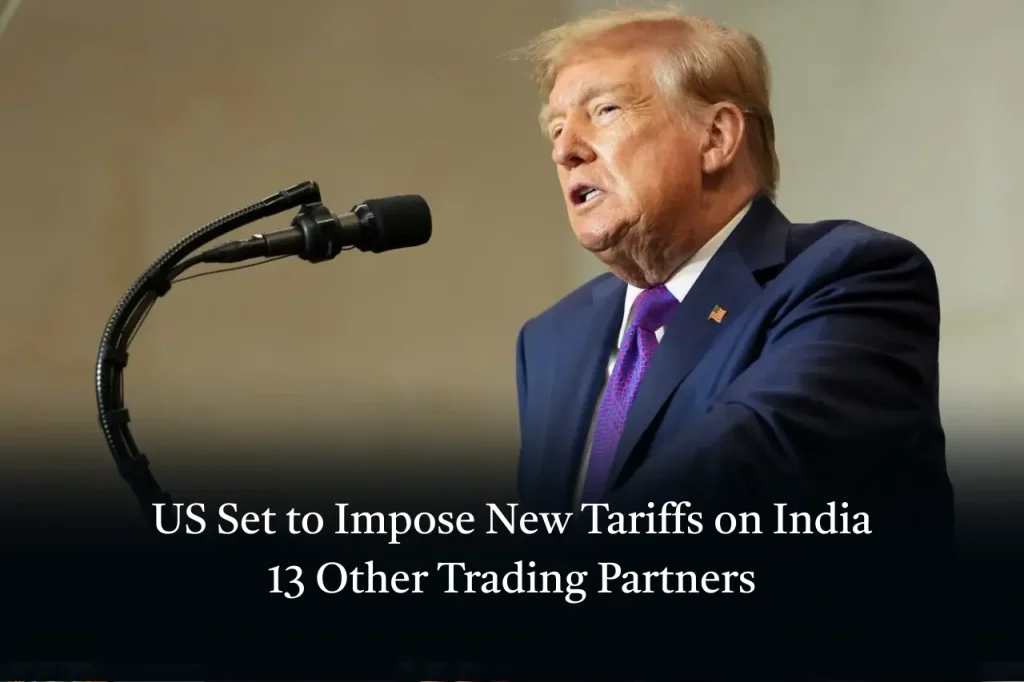
The United States is preparing to introduce a fresh round of import tariffs targeting India, China, the European Union and 13 other major trading partners. The proposed move by President Donald Trump’s administration could increase global trade tensions and create new challenges for exporters, manufacturers and international businesses.
According to reports published on November 24 and 25, 2026, the US Trade Representative’s Office (USTR) is preparing to release the findings of a months-long investigation into alleged excess industrial capacity and government subsidies in 16 major economies.
The investigation could lead to additional import duties on a wide range of products entering the American market. While the exact tariff rates and implementation dates have not yet been finalised, the announcement could have significant implications for international trade.
For India, the development is particularly important because the United States is one of its largest export destinations. New tariffs could affect Indian manufacturers, exporters and businesses that depend heavily on American customers.
Let’s understand why the US is planning new tariffs, which countries could be affected and what the decision could mean for India’s economy.
US Plans Fresh Tariffs on 16 Trading Partners
The Trump administration is preparing a new tariff strategy targeting 16 major trading partners, including some of the world’s largest manufacturing economies.
The countries and trading partners included in the investigation are:
- India
- China
- European Union
- Japan
- South Korea
- Mexico
- Vietnam
- Taiwan
- Thailand
- Malaysia
- Indonesia
- Switzerland
- Norway
- Singapore
- Bangladesh
- Cambodia
According to reports, the US Trade Representative’s Office is expected to announce the investigation’s findings as early as November 25, although the timing could change.
The proposed duties are expected to target imported manufactured goods and could differ depending on the country and the products involved.
However, the final tariff rates, exemptions and implementation timelines remain uncertain.
The administration is also considering how the new duties will interact with existing trade agreements and previously imposed import taxes.
Why Is Donald Trump Planning New Tariffs?
One of the main reasons behind the proposed tariffs is the Trump administration’s concern about excess industrial capacity in foreign economies.
Washington argues that some countries provide financial support, subsidies and other incentives to domestic manufacturers, allowing them to produce more goods than their domestic markets require.
According to the US administration, this can result in excess products being exported to international markets at lower prices, creating additional competition for American manufacturers.
The investigation focuses on industries such as:
- Steel and aluminium
- Electric vehicles
- Solar products
- Household appliances
- Industrial manufacturing
- Other manufactured goods
The US government believes these practices could negatively affect American companies, workers and domestic manufacturing.
China has rejected allegations that its exports reflect unfair industrial practices, arguing that its manufacturing competitiveness comes from its economic strengths.
The proposed tariffs are therefore part of a broader effort by Washington to protect domestic industries and strengthen American manufacturing.
India Could Face Additional US Import Duties
India is among the 16 economies included in the US industrial capacity investigation.
The development comes at a sensitive time for India-US trade relations, as both countries have been working towards improving economic cooperation and negotiating trade arrangements.
The US has previously raised concerns about India’s manufacturing capacity and trade surplus.
According to the USTR’s investigation notice, Washington has pointed to India’s trade surplus with the United States and excess manufacturing capacity in sectors such as solar modules, steel and petrochemicals.
India has rejected the allegations and argued against the findings of the investigation.
If additional tariffs are introduced, Indian exporters could face higher costs when selling products in the American market.
Some of the industries that could potentially experience pressure include:
- Textiles and garments
- Engineering goods
- Chemicals
- Pharmaceuticals, depending on the final product coverage
- Solar and renewable energy equipment
- Industrial machinery
- Other manufactured products
However, the actual impact will depend on the final tariff structure, product exemptions and existing trade arrangements.
Reports suggest that India could face higher duties than some economies that have negotiated trade agreements with Washington. The exact rates have not yet been confirmed.
China Could Face Higher Tariffs Than Other Countries
China is expected to remain one of the biggest targets of the proposed US trade measures.
The Trump administration has repeatedly criticised China’s industrial subsidies and manufacturing policies, arguing that excessive production is creating unfair competition for American businesses.
Chinese manufacturers have a significant presence in global markets, particularly in electronics, electric vehicles, solar panels, steel and industrial equipment.
The proposed tariffs could therefore affect a wide range of Chinese exports to the United States.
However, Washington must also consider its existing trade arrangements with Beijing.
The United States and China have maintained a trade truce, with certain tariff restrictions and trade measures subject to negotiated limits.
According to reports, the administration is considering maintaining agreed tariff arrangements while introducing additional duties through the new investigation.
The final approach will be important for determining whether the latest measures create another major escalation in US-China trade tensions.
How Will the New Tariffs Affect the European Union?
The European Union is another major trading partner included in the investigation.
European manufacturers export significant quantities of automobiles, machinery, chemicals, industrial equipment and other products to the American market.
New US tariffs could increase costs for European businesses and potentially reduce their competitiveness against American manufacturers.
However, the European Union has already negotiated trade arrangements with the Trump administration.
Reports indicate that the US may maintain tariff levels in line with previously agreed trade arrangements, with the EU potentially facing an overall rate of 15% or lower under those arrangements.
The final treatment of individual products and sectors will depend on the administration’s announcement.
European officials and businesses will likely monitor the investigation closely because any additional trade restrictions could affect investment decisions, manufacturing operations and supply chains.
Why Is the US Introducing New Tariffs After the Supreme Court Decision?
Another important reason behind the latest developments is a February 2026 US Supreme Court ruling that struck down a large part of President Trump’s earlier tariff programme imposed under emergency powers.
Following the ruling, the administration began exploring other legal mechanisms to introduce trade restrictions.
The latest investigation is being conducted under Section 301 of the Trade Act of 1974.
This provision allows the US government to investigate foreign trade practices that it considers unreasonable, discriminatory or harmful to American commerce.
If the investigation supports the administration’s allegations, Washington could use Section 301 to impose additional duties on imports from the countries involved.
The latest proposal is therefore part of the administration’s broader effort to maintain its tariff strategy through a different legal route.
It could also replace some of the previous global import taxes that were affected by the Supreme Court ruling.
Could New US Tariffs Increase Prices for American Consumers?
The proposed tariffs could have consequences beyond international trade relationships.
Import duties are generally paid by importers bringing products into the United States. Businesses may then pass some or all of these additional costs to customers.
If tariffs increase on imported goods, American consumers could face higher prices for certain products.
Manufacturers that depend on imported raw materials, components and industrial equipment may also experience higher production costs.
For example, companies importing machinery, electronic components, solar equipment or manufactured products could need to adjust their supply chains.
The impact will depend on how much of the additional cost businesses absorb and how much they pass on to consumers.
There is also a possibility that companies could move production to other countries or search for alternative suppliers to reduce their exposure to tariffs.
What Does This Mean for India’s Economy?
The potential tariff announcement could create both challenges and opportunities for India.
On the negative side, higher US import duties could make Indian products more expensive for American buyers.
This could affect export orders, manufacturing investments and business confidence in some industries.
Small and medium-sized Indian exporters may face particular difficulties because they often operate with limited profit margins.
However, the situation could also create opportunities.

If American companies look for alternatives to Chinese manufacturing, Indian businesses could attract additional orders and investment.
India’s manufacturing sector has been expanding in areas such as electronics, engineering, automobiles, pharmaceuticals and renewable energy.
With competitive production costs and a large domestic market, India could strengthen its position as an alternative manufacturing destination.
However, this opportunity will depend on India’s ability to remain competitive while managing changing US trade policies.
What Happens Next?
The next important development will be the release of the US Trade Representative’s findings under the Section 301 investigation.
Businesses and governments will be watching for details about:
- The final tariff rates for each country.
- Which products will be covered by the new duties.
- Whether any exemptions will be introduced.
- How the tariffs will interact with existing trade agreements.
- When the new import duties could take effect.
India, China and the European Union are likely to examine the announcement carefully before deciding their next steps.
The possibility of further negotiations or diplomatic discussions also remains open.
Until the final details are officially announced, businesses should avoid assuming that a particular tariff rate will apply to their products.
Final Thoughts
The United States’ plan to introduce fresh tariffs on India, China, the European Union and 13 other trading partners could become an important development in global trade during 2026.
The proposed measures are aimed at addressing what Washington describes as excess industrial capacity and unfair manufacturing advantages in foreign economies.
For India, the announcement is especially significant because stronger trade relations with the United States are important for its export growth and manufacturing ambitions.
While additional tariffs could create challenges for Indian exporters, they may also encourage businesses to improve competitiveness and explore new international markets.
The final impact will depend on the tariff rates, affected industries and exemptions announced by the US government.
For now, global businesses and investors will be closely watching Washington’s next move as uncertainty surrounding international trade continues.
Leave a Reply